
IERS:Your Professional Wastewater Treatment Pump Manufacturer!
IERS Machinery Technology (Shandong) Co., Ltd. is an innovative enterprise specializing in the field of mechanical technology. The company mainly produces high-quality mechanical equipments such as water pumps, blowers, mixers, dehydrators, etc, all are used for water and wastewater treatment. Our products are widely used in various industries with features of advanced technology, stable performance, and reliable quality. The company adheres to the concept of exploration and innovation, constantly exploring new technologies and processes, and is committed to providing customers with more advanced and efficient mechanical products.
-
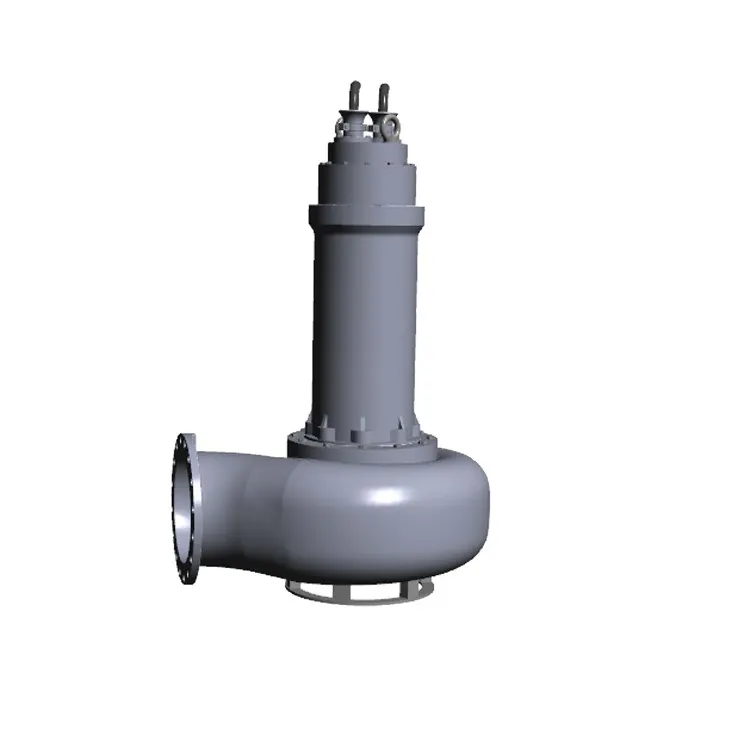
![Sewage Submersible Pump]() Sewage Submersible PumpPower: 0.75-200kWview more
Sewage Submersible PumpPower: 0.75-200kWview more
Dia.: DN50-DN400mm
Head: 4.5-60m
Capacity: 6-2000m3/h
Material: FC200, SUS304, SUS316, SUS316L -
![Vortex Submersible Pump]() Vortex Submersible PumpPower: 0.25-7.5kWview more
Vortex Submersible PumpPower: 0.25-7.5kWview more
Dia.: DN50-DN150mm
Head: 5-20m
Capacity: 9-70m3/h
Material: FC200 -
![Submersible Cutter Pump]() Submersible Cutter PumpSubmersible cutter pumpview more
Submersible Cutter PumpSubmersible cutter pumpview more
Power: 0.75-90kW
Dia.: DN50-DN300mm
Head: 6-70m
Capacity: 10-800m3/h
Material: FC200 -
![Submersible Recirculation Pump]() Submersible Recirculation PumpPower: 1.5-22kWview more
Submersible Recirculation PumpPower: 1.5-22kWview more
Dia.: DN400-DN800mm
Head: 0.2-1.8m
Capacity: 50-1400L/S
Material: FC200、SUS304、SUS316、SUS316L -
![Submersible Axial Flow Pump]() Submersible Axial Flow PumpPower: 1.5-22kWview more
Submersible Axial Flow PumpPower: 1.5-22kWview more
Diameter: DN400-DN800mm
Head: 0.2-1.8m
Capacity: 50-1400L/S
Material: FC200、SUS304、SUS316、SUS316L -
![Submersible Pump Aquaculture]() Submersible Pump AquaculturePower: 2.2-15kWview more
Submersible Pump AquaculturePower: 2.2-15kWview more
Dia.: DN150-DN300mm
Head: 3-6m
Capacity: 150-500m3/h
Material: FC200、SUS304、SUS316、SUS316L -
![Horizontal Monoblock Sewage Pump]() Horizontal Monoblock Sewage PumpPower: 0.75-22kWview more
Horizontal Monoblock Sewage PumpPower: 0.75-22kWview more
Dia.: DN50-DN200mm
Head: 6-40m
Capacity: 10-450m3/h
Material: FC200、SUS304、SUS316、SUS316L -
![Horizontal Coupling Sewage Pump]() Horizontal Coupling Sewage PumpPower: 0.75-132kWview more
Horizontal Coupling Sewage PumpPower: 0.75-132kWview more
Dia.: DN50-DN400mm
Head: 4-55m
Capacity: 8-2200m3/h
Material: FC200、SUS304、SUS316、SUS316L -
![Horizontal Vortex Pump]() Horizontal Vortex PumpPower: 0.37-11kWview more
Horizontal Vortex PumpPower: 0.37-11kWview more
Diameter: DN40-DN100mm
Head: 9-20m
Capacity: 4-100m3/h
Material: FC200、SUS304、SUS316、SUS316L -
![Self-priming Centrifugal Pump]() Self-priming Centrifugal PumpPower: 0.75-18.5kWview more
Self-priming Centrifugal PumpPower: 0.75-18.5kWview more
Diameter: DN50-DN150
Head: 8-31m
Capacity: 10-180m3/h
Material: FC200、SUS304、SUS316、SUS316L -
![Vertical Monoblock Sewage Pump]() Vertical Monoblock Sewage PumpPower: 0.75-22kWview more
Vertical Monoblock Sewage PumpPower: 0.75-22kWview more
Diameter: DN50-DN200mm
Head: 6-40m
Capacity: 10-450m3/h
Material: FC200、SUS304、SUS316、SUS316L -
![Single-stage Centrifugal Pump]() Single-stage Centrifugal PumpPower: 0.37-90kWview more
Single-stage Centrifugal PumpPower: 0.37-90kWview more
Diameter: DN25-DN300
Head: 7-132m
Capacity: 2-864m3/h
Material: FC200、SUS304、SUS316、SUS316L


Why Choose Us
High Quality
We treat every product with an attitude of striving for excellence, strictly control every link from design to production, and ensure excellent product quality.
Product Application
Our products are used in sewage treatment, air conditioning, construction, water supply and drainage, pumping station and so on.
Production Market
Please rest assured that we have participated in many sewage treatment projects at home and abroad!
Production Equipment
We have CNC machining equipment, testing equipment, testing equipment.
Technical specifications
|
Product Name |
Sewage Submersible Pump |
|
Power supply |
3φ 380V 50Hz |
|
Frequency |
35-50Hz |
|
Power |
0.75-200kW |
|
Dia |
DN50-DN400mm |
|
Head |
4.5-60m |
|
Capacity |
6-2000m3/h |
|
Material |
FC200, SUS304, SUS316, SUS316L |
|
Working mode |
S1 |
|
Protection level |
IP68 |
|
Insulation level |
F level (H level is optional) |
|
Medium temperature |
0-40℃ |
|
Density |
≤1.05×10 3 kg/m 3 |
|
PH scope |
5-9 |
|
Maximum immersion depth |
20m |
|
Installation method |
Vertical installation |
Facilitating Wastewater Transport: Wastewater treatment pumps enable the efficient movement of wastewater from homes and businesses to treatment plants. Without these pumps, gravity alone would not suffice in many situations, especially in low-lying areas.
Preventing Backflow: Wastewater treatment pumps help prevent backflow, which can lead to sewage overflow in residential or commercial settings. This is crucial in maintaining sanitary conditions and preventing health hazards.
Reducing Environmental Impact: By ensuring that wastewater is effectively transported to treatment facilities, Wastewater treatment pumps play a significant role in minimizing the environmental impact of sewage disposal. Properly managed wastewater reduces the risk of contamination in local water bodies.
Longevity Of Septic Systems: The wastewater treatment pumps contribute to the longevity and efficiency of septic systems by preventing the accumulation of solids and excess water.

Residential septic systems: The system efficiently transports effluent from the septic tank to a drain or leach field for further treatment and absorption into the soil. Without a wastewater treatment pump, these systems would struggle to function correctly, potentially leading to backups and overflows.
Aerobic treatment units: In advanced wastewater treatment systems like aerobic treatment units, wastewater treatment pumps are indispensable. These units use aerobic bacteria to treat wastewater further before it is released into the environment.
Lift stations
Lift stations are employed in areas with challenging terrain or when wastewater must be pumped uphill.
Commercial and industrial settings
Wastewater treatment pumps find applications in commercial and industrial facilities, particularly those that generate wastewater with solid content. These pumps efficiently move wastewater to holding tanks or treatment facilities for proper disposal.
Graywater recycling
In some eco-conscious setups, wastewater treatment pumps recycle graywater — wastewater from sinks, showers and washing machines. These pumps transport graywater to filtration and treatment systems, allowing it to be reused for landscape irrigation.
Impellers
Impellers are critical for moving fluid within the pump, and their design directly affects the pump’s performance. Common types include:
Open impellers: Ideal for handling solids but prone to wear due to their exposed design.
Closed impellers: More efficient in transferring liquids but less effective when dealing with large solids.
Vortex impellers: Best for applications involving high solids content, as they minimize clogging and reduce wear.
Casings and Housings
The casing surrounds the impeller and directs fluid flow. Durable materials such as cast iron, stainless steel, and thermoplastics are used to withstand the corrosive and abrasive nature of wastewater. This durability is crucial for both standard and submersible wastewater pumps, which often operate in submerged conditions.
Seals and Bearings
Seals prevent leaks and protect the pump’s internal components, while bearings reduce friction and wear on moving parts. Mechanical seals are the most common choice due to their durability, especially in high-pressure wastewater pumping applications.
Motors and Drives
Motors power the pump, with electric and diesel options widely used. Variable frequency drives (VFDs) are often employed to enhance energy efficiency by adjusting motor speed based on workload, ensuring optimal operation of wastewater pumps in diverse applications.
Types of Wastewater Treatment Pump
Centrifugal Pumps
Centrifugal pumps are commonly used in wastewater treatment facilities due to their versatility and ability to move large volumes of wastewater quickly. Centrifugal pumps use a rotating impeller to spin the wastewater, creating centrifugal force that moves the fluid through the pump and the treatment process.
Positive Displacement Pumps
Positive displacement pumps are ideal for applications where precise flow rates are required. These pumps work by trapping a specific amount of wastewater and then displacing it to create a pressure differential. This pressure differential then forces the wastewater through the pump housing.
Submersible Pumps
Submersible pumps are designed to operate underwater and are commonly used in wastewater treatment applications where the pump needs to be submerged in the wastewater. These pumps are typically more efficient than other types of wastewater pumps and are available in both single-stage and multi-stage designs.
Reciprocating Pumps
Reciprocating pumps are a type of positive displacement pump that works by using a piston to move wastewater through the pump housing. Reciprocating pumps are often used to pump wastewater from lift stations to wastewater treatment plants.
Air Pressure Pumps
Air pressure pumps are a type of wastewater pump that uses compressed air to force wastewater through a pipe. Air pressure pumps are often used in lift stations and other applications where wastewater needs to be pumped over a short distance.
Macerator Pumps
Macerator pumps are a type of wastewater pump used to cut up solids and debris in wastewater. This makes it easier to pump the wastewater through pipes and prevents clogging.
Packaging and Delivery
|
Selling Units |
Single item |
Single package size |
60X50X100 cm |
|
Single gross weight |
300.000 KG |
||
FAQ
We're well-known as one of the leading wastewater treatment pump manufacturers and suppliers in China. Please rest assured to buy high quality wastewater treatment pump for sale here from our factory. For price consultation, contact us.


