

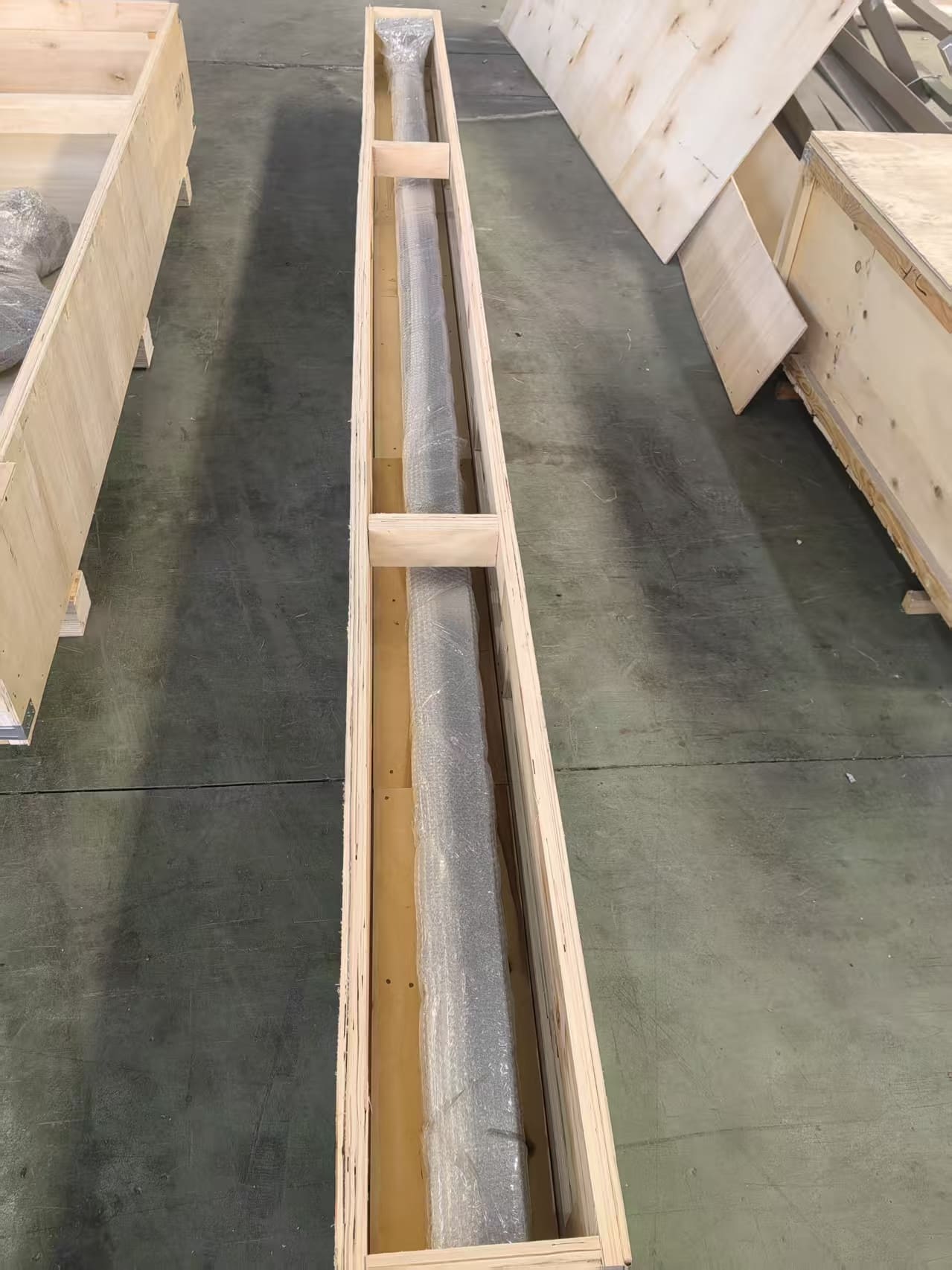
Our submersible recirculation pump with mounting system, mounting system with a freestanding crane in SUS304 were shipped to Overseas partner
WhatsApp: 86 150 0069 3129


Submersible recirculation pumps are specialized submersible pumps designed for efficiently pumping and recirculating liquids, sludge, or mixed liquor in various water treatment systems, particularly in sewage treatment plants. Unlike conventional pumps that require separate installation above the liquid surface, these pumps are fully submerged in the medium they handle, offering unique advantages in space-saving, operational efficiency, and process stability. They play an indispensable role in maintaining the normal operation of biological treatment processes, such as nitrification and denitrification, by ensuring the effective recirculation of activated sludge and mixed liquor.
The working principle of submersible recirculation pumps is straightforward yet efficient. The pump's motor and impeller are integrated into a hermetically sealed unit, which is completely immersed in the liquid or sludge. When the motor is activated, it drives the impeller to rotate at high speed, generating centrifugal force that draws the medium into the pump through the water inlet and delivers it to the designated recirculation point via the outlet pipeline. This submerged design eliminates the need for priming operations required by surface-mounted pumps, enabling quick and convenient startup. Depending on the application scenario, the impeller is usually designed as axial-flow or mixed-flow type, which is tailored to the low-lift and high-flow requirements of recirculation processes, ensuring maximum flow circulation with minimal energy consumption.
One of the most prominent features of submersible recirculation pumps is their compact and integrated design. The integration of the motor and pump body reduces the overall volume and weight, allowing easy installation in limited spaces such as the bottom or side of sedimentation tanks and aeration tanks without the need for costly ground pump rooms or complex pipeline arrangements, thus significantly saving construction and installation costs. Additionally, these pumps are equipped with advanced sealing systems-typically triple sealing systems with double oil chambers as an option-to enhance the protection of the motor and gearbox, ensuring leak-proof operation even in harsh sewage environments. They also adopt ultra-high-efficiency IE3 motors or equivalent, which not only improve energy efficiency but also reduce long-term operational costs.
Reliability and ease of operation are also key advantages of submersible recirculation pumps. Many models are designed with self-cleaning impellers to prevent clogging by solid particles or fibrous substances in the sludge, ensuring smooth operation. Equipped with multiple sensors for seal monitoring and an over-temperature protection system (TCS), the pumps can provide real-time warnings and automatic shutdown in case of abnormalities, avoiding equipment damage and ensuring worry-free operation. The installation process is simplified by the guide rod and automatic coupling system, allowing the pump to slide down along the guide rod and connect to the pipeline automatically, which also facilitates maintenance and inspection without emptying the pool water.
Submersible recirculation pumps are widely applied in various water treatment scenarios, with sewage treatment plants being their primary application field. In the activated sludge system, they are used to recirculate sludge from sedimentation tanks to aeration tanks, maintaining the appropriate sludge concentration (usually 2000-4000mg/L) to promote the efficient degradation of organic pollutants by microorganisms. In biological denitrification and phosphorus removal processes, they recirculate nitrate-containing mixed liquor back to the denitrification tank, where anaerobic processes decompose nitrate into nitrogen and oxygen, thereby removing nitrogen from the sewage system. They are also used in industrial wastewater treatment systems for circulating sewage or treated sludge, as well as in sludge thickening tanks to transport sludge to dewatering equipment or back to the front-end treatment process.


